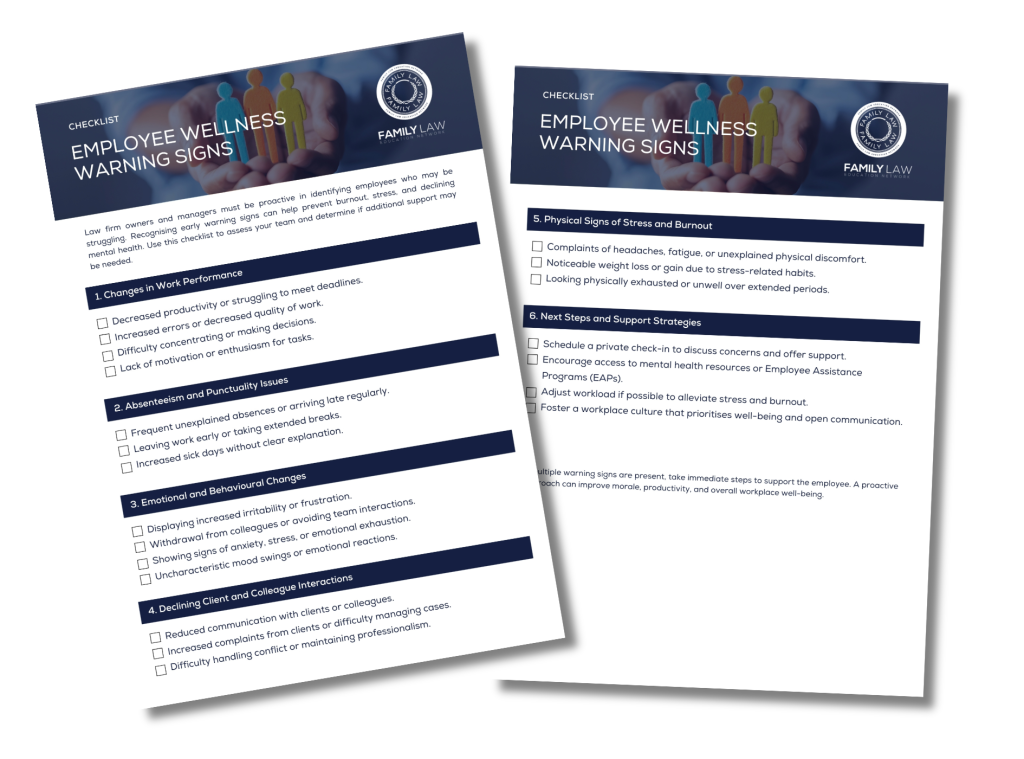


In the high-pressure world of family law, practitioner wellness is not just a priority—it’s a necessity. The emotional intensity of legal matters, long hours, and the complexities of client cases can take a toll on even the most resilient professionals. As leaders in law firms, it is crucial to recognise when an employee or colleague may need additional support before burnout or mental health concerns escalate. Here are key signs to watch for and how to address them effectively.
1. Changes in Work Performance
A sudden drop in productivity, increased errors, missed deadlines, or a general decline in work quality can indicate that someone is struggling. While occasional lapses are normal, a consistent downward trend suggests that something deeper may be affecting their ability to perform.
2. Increased Absenteeism or Tardiness
Frequent unexplained absences, arriving late, or leaving early can be red flags. These patterns may signal underlying stress, health concerns, or personal difficulties that require intervention.
3. Withdrawal from Team Interaction
If a previously engaged and collaborative colleague starts isolating themselves, skipping meetings, or avoiding social interactions, they may be experiencing emotional exhaustion or stress.
4. Noticeable Mood Changes
Irritability, mood swings, frustration, or uncharacteristic emotional reactions could indicate stress, anxiety, or burnout. Pay attention to significant changes in demeanour or communication style.
5. Increased Cynicism or Negative Outlook
A shift in attitude—expressing disengagement, complaining more than usual, or showing a loss of passion for their work—can be an early warning sign of burnout or dissatisfaction.
6. Difficulty Concentrating or Making Decisions
Cognitive overload due to stress can manifest as forgetfulness, indecision, or an inability to focus. If a colleague appears overwhelmed by routine tasks, they may need additional support.
7. Physical Symptoms
Chronic stress often presents physically—headaches, fatigue, stomach issues, or frequent colds may all be stress-related. If someone frequently complains of feeling unwell, it could be a sign of deeper issues.
How to Provide Support
Recognising the signs is only the first step; taking proactive measures is just as important.
Create a Safe Space for Open Communication: Foster an environment where colleagues feel comfortable discussing their struggles without fear of judgment or repercussions.
Offer Mental Health Resources: Provide access to counselling services, employee assistance programs, or wellness initiatives.
Encourage Work-Life Balance: Set realistic workloads, discourage excessive overtime, and promote flexible working arrangements where possible.
Implement Regular Check-Ins: Managers and team members should schedule one-on-one meetings to check in on workload and well-being, offering support where needed.
Lead by Example: Show that prioritising well-being is a firm-wide commitment by maintaining healthy boundaries and advocating for wellness initiatives.
By staying attuned to these early signs and fostering a supportive workplace culture, firms can improve employee well-being, reduce turnover, and create a more resilient team. Investing in practitioner wellness is not just about individual support—it’s about building a sustainable, thriving practice.
Download our Free Employee Wellness Warning Signs Checklist HERE