
FLENA | Practitioner Wellness & Mental Health Conversations
At the Family Law Education Network, we recognise that legal professionals—particularly those working in family law—often face heightened emotional and psychological demands. As mental health becomes a more openly discussed topic within our profession, it’s crucial that we approach these conversations with accuracy, sensitivity, and purpose.
Understanding mental health is not just about knowledge—it’s about how we communicate, support one another, and challenge long-standing misconceptions that can cause harm.
Why Mental Health Conversations Matter in Law
Conversations about mental health can be a catalyst for cultural change in legal practice. Informed, honest discussions help us move toward a profession where practitioners feel safe, supported, and able to seek help without fear of judgement.
Here’s why it matters:
- Reduces stigma: Talking openly about mental health challenges helps dismantle harmful assumptions, especially in professions like law where stoicism is often mistaken for strength.
- Encourages early help-seeking: When lawyers understand the signs of mental strain—both in themselves and others—they’re more likely to access support early, improving outcomes.
- Builds empathy in high-stakes environments: Compassionate communication strengthens teams, enhances client relationships, and supports mentally healthy workplaces.
- Promotes sustainable careers: Long-term wellbeing isn’t just about managing workload—it’s about building a culture of care across the profession.
Common Misconceptions We Need to Challenge
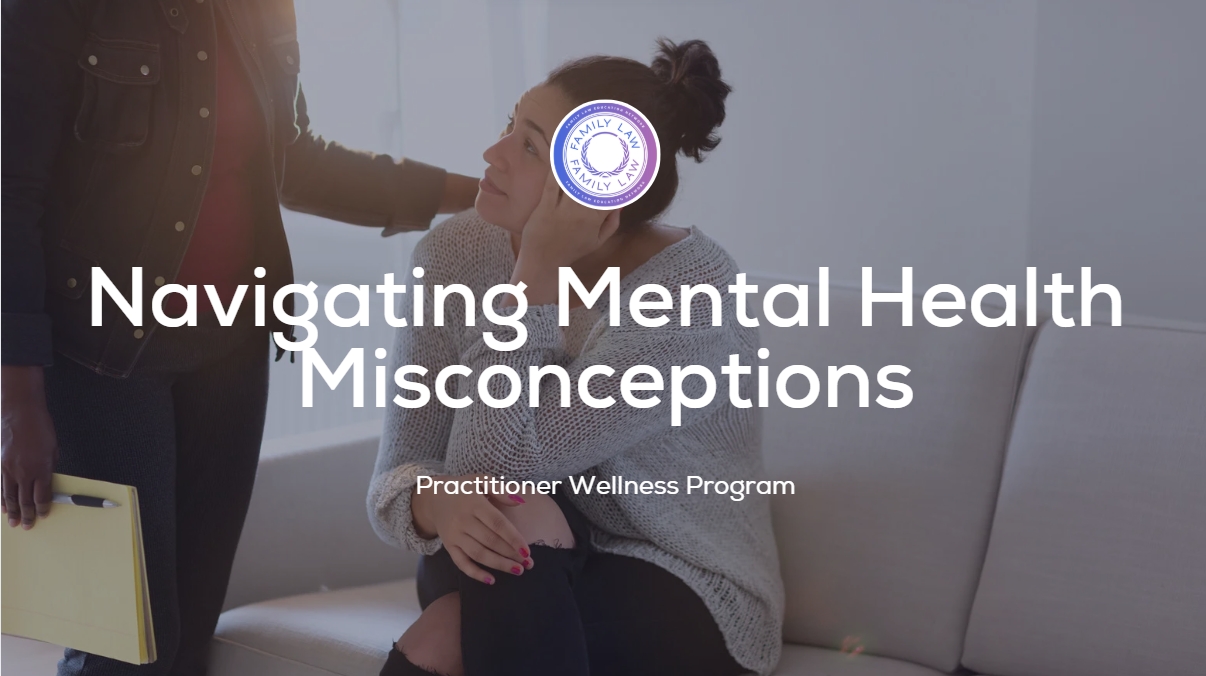
Despite growing awareness, myths around mental health still persist—particularly in high-pressure professions like law. These include:
- “Mental health issues are rare.”
- “People with mental illness are unstable or unsafe.”
- “You should just push through it or toughen up.”
- “Seeking help is a sign of weakness.”
These beliefs are not only false—they’re harmful. A national survey found that 1 in 3 people with lived experience of mental illness had faced discrimination from family and friends, and 1 in 4 reported unfair treatment from their partner. The workplace wasn’t immune—1 in 3 reported stigma or mistreatment at work.
In law, where reputation and resilience are closely linked, this kind of stigma can be particularly damaging.
Improving the Way We Talk About Mental Health in Family Law
Family lawyers are uniquely positioned to influence how mental health is discussed—not just within firms, but in client interactions and the broader legal system. To make these conversations more constructive and less confronting, we can:
- Listen without judgment: Give space for honest conversations among colleagues, clients, and within yourself.
- Acknowledge the spectrum: Mental health isn’t binary—it exists on a continuum, and people may move along that spectrum throughout their career.
- Educate to dispel fear: Misinformation creates stigma. Accurate, respectful discussions break it down.
- Lead with empathy: Approach mental health with the same compassion as physical illness or injury.
- Model support: Whether it’s informal check-ins or access to professional help, visible support makes a difference.
- Challenge harmful language: Speak up when you hear dismissive or stigmatising comments.
- Encourage professional development: Programs like Mental Health First Aid and FLENA’s wellness CPDs provide tools to better understand, support, and protect the wellbeing of yourself and others.
Creating a Culture of Compassion and Clarity
At FLENA, we believe legal education includes fostering workplaces where mental health is acknowledged, respected, and supported. Every conversation that challenges stigma or corrects a myth contributes to a healthier legal profession—one where practitioners can thrive.
Mental health isn’t a weakness—it’s a part of being human. And in a profession where we support people at their most vulnerable, we owe it to ourselves and our colleagues to ensure we do the same within our own community.
Let’s keep the conversation going—with facts, empathy, and purpose.