Family Law is, at its core, about human connection and communication — both within the family involved in a dispute and in the relationship between a client and their lawyer. Yet, despite our best intentions, the systems we work within and the way we deliver legal services often assume all people think, communicate, and respond the same way. For neurodivergent clients, that assumption can create barriers that are disheartening and emotionally taxing.
Neurodiversity describes the idea that people think, learn, and behave in different ways. In Family Law, clients with neurodivergence may be facing separation, parenting conflicts, family violence or financial pressure without support that aligns with how they understand information or manage stress.
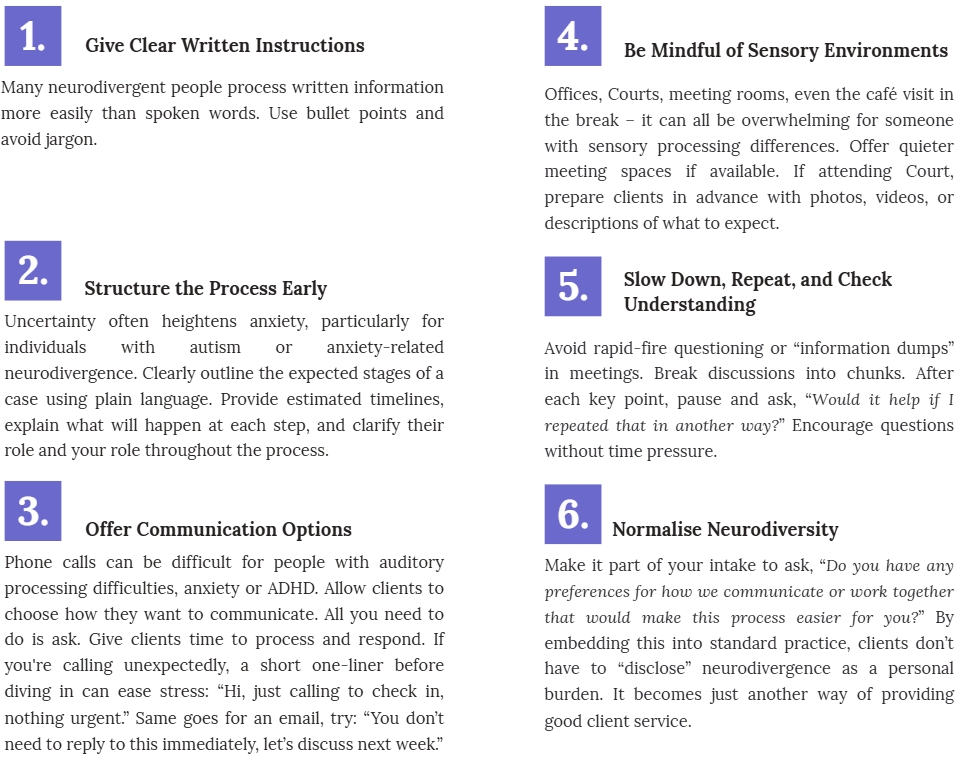
So what does it actually look like to build a neurodiversity-friendly legal practice? The good news: it doesn’t require a complete system overhaul! Just thoughtful, practical changes to how we communicate, engage, and plan.
Family lawyers are uniquely positioned to model inclusive, accessible legal practice. Embrace neurodiversity as part of your client’s lived experience, not as a problem to “accommodate”, but a difference to understand.